The FWR origin story
Friends With Robots was born out of ongoing conversations between two partners — Owen and Saba — one with a background in technology and strategy, the other in creative operations and relational therapy. Those conversations kept circling back to the same tension: organizations were racing to adopt AI, but almost no one was pausing to think about the people at the center of this moment and how to support them as their world shifts around them.
The name came into focus at a local AI meetup, when an engineer mentioned that their team had found a "shared enemy" in AI. It struck Owen deeply. The idea that we'd enter one of the most significant technological shifts in history with our teams in opposition to the tools felt like exactly the wrong foundation — and Friends With Robots was built on the belief that a different approach is needed.
Who we are
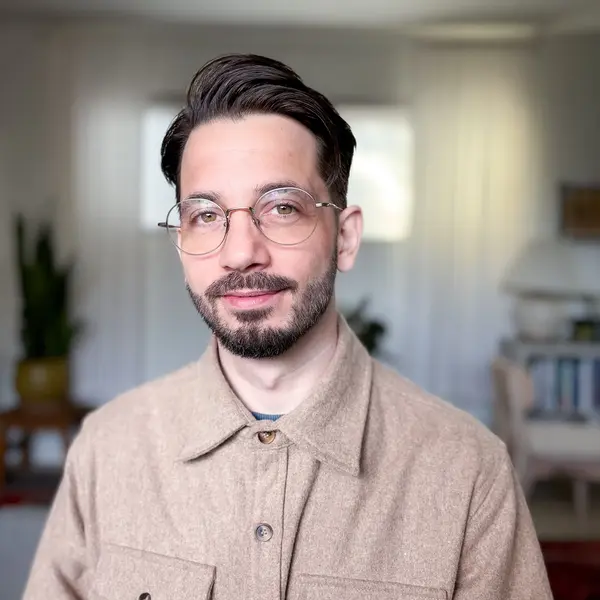
Owen
Finding where AI serves the work, not the other way around.
Owen has spent over a decade leading teams through moments of technological change. Platform migrations, system overhauls, global expansions, and the kinds of transitions that look technical on the surface but land squarely on people.
What he's learned is that technology is rarely the hardest part. It's helping a team move through uncertainty, stay aligned, and come out the other side with something that actually works for them.
At Friends With Robots, he focuses on where technology and people meet. That's where there's real opportunity to support and amplify the things we value most.
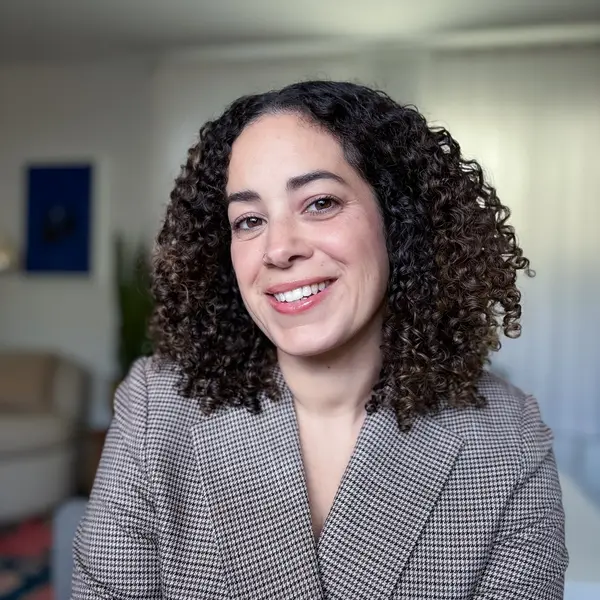
Saba
Helping humans find their value in a world of machines.
Saba has spent her career moving across creative operations, community health, and clinical practice. She's led high-profile campaigns at globally recognized agencies and practices as a Marriage and Family Therapist with advanced certifications in emotionally focused, somatic, and trauma-informed approaches.
Across all of it, she's seen the same pattern: when things move fast, the human side doesn't disappear. It gets louder.
At Friends With Robots, she focuses on what happens to people when systems change. That's where the real work of adaptation lives. Not in the tools, but in how teams stay grounded while everything shifts.